Arugula Summer Salad
Quick and easy summer salad that primes your digestive system.
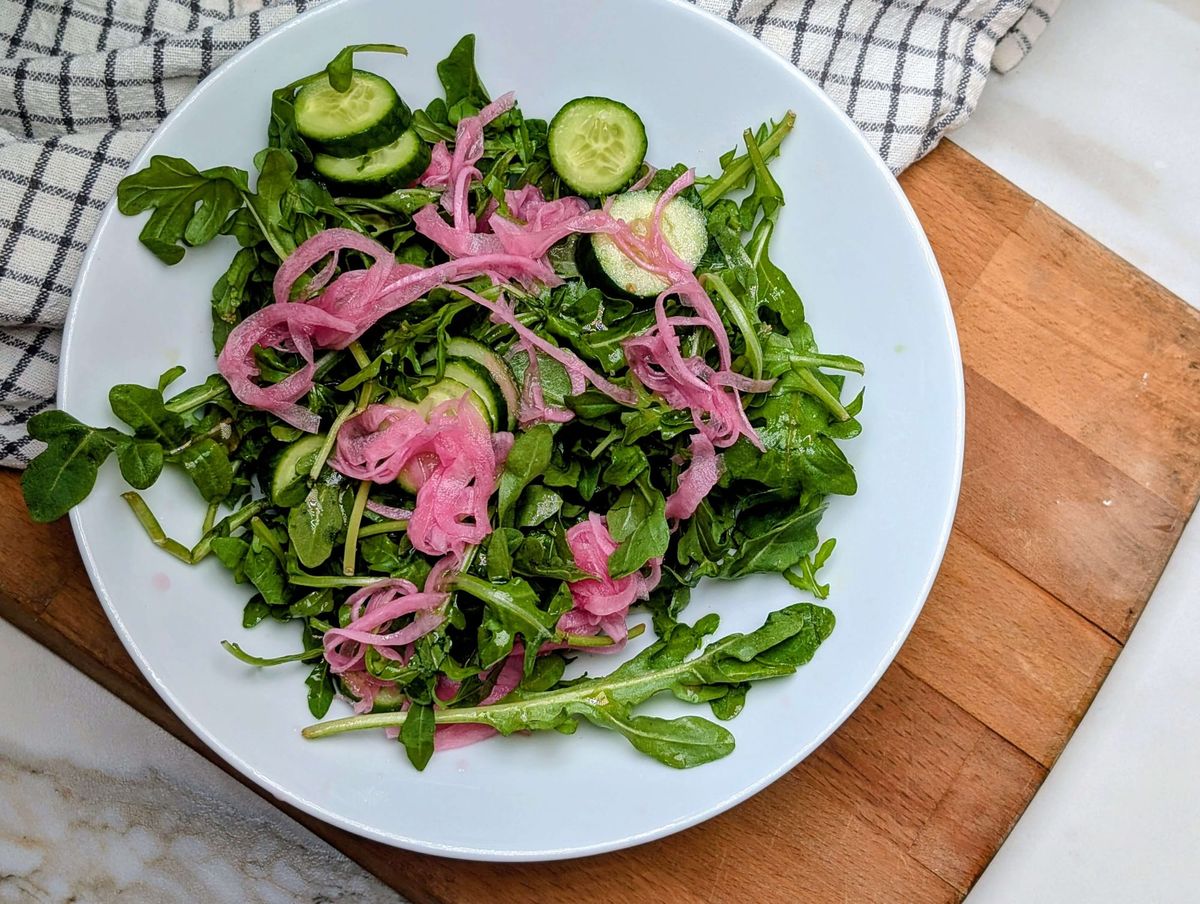
This salad is quick and easy. It doesn't require many ingredients or a ton of veggie chopping. However, it packs a nutritional punch and it's quite yummy as far as salads go (as long as you like pickled onions).
Keep reading to learn the benefits of the ingredients in this salad, or click the Jump to Recipe button above to skip all that and just read the recipe. 😉
Nutrient Breakdown
Arugula is actually a cruciferous vegetable (along with broccoli, brussels sprouts and kale), not a lettuce. Thus, it is quite nutrient dense, and makes a great addition to any salad. Arugula is full of glucosinolates (sulfur compounds) linked to lower inflammation and reduced cancer risk, as well as many other micronutrients.
Glucosinolates
The sharp, peppery bite in arugula comes from glucosinolates, sulfur-containing compounds unique to cruciferous plants. When chewed, these break down into isothiocyanates, which research shows help protect cells from DNA damage and reduce inflammation.
Vitamin K
One cup of raw arugula provides roughly 20% of your daily recommended intake of Vitamin K. This vitamin is crucial for blood clotting and works closely with calcium to improve bone mineral density. (For maximum nutrient absorption, a healthy drizzle of olive oil or some other fat pairing is important.)
Nitrates
Arugula is rich in dietary nitrates, which the body converts into nitric oxide. Nitric oxide acts as a natural vasodilator, relaxing blood vessels, improving blood flow, and helping to naturally manage healthy blood pressure levels.
Antioxidants
It contains significant amounts of lutein and zeaxanthin, two powerful carotenoid antioxidants that accumulate in the retina. They act like natural sunglasses, filtering out harmful blue light and reducing the long-term risk of age-related macular degeneration.
The "Bitter Reflex" and How It Works
The moment arugula hits your tongue, your taste buds detect the bitter compounds (primarily glucosinolates) and send an immediate signal down your vagus nerve to your brain, which essentially says, "Heads up, something complex is coming—get ready to digest."
We call this the bitter reflex. This reflex triggers a neurological and hormonal process in your digestive tract:
- Saliva production increases: Saliva contains enzymes that immediately start breaking down starches.
- Stomach acid (HCl) ramps up: This primes your stomach to efficiently break down heavy proteins, like meats or grains.
- Gallbladder and pancreas join in: The liver and gallbladder are signaled to release bile (crucial for breaking down and absorbing healthy fats), while the pancreas releases digestive enzymes to digest fats, carbs, and proteins.
This arugula summer salad is the perfect precursor to your main meal, specifically because it is a bitter. Because it primes your digestive system, you will experience less bloat and more stable blood sugar after your meal. It will also help you absorb more micronutrients from everything you eat.
Other Common Dietary "Bitters"
Western diets have largely bred bitterness out of food in favor of sweet and salty profiles, but a traditional diet relies heavily on them. Other excellent dietary bitters include:
- Greens: Radicchio, endive, dandelion greens, and kale.
- Herbs & Spices: Ginger, turmeric, and peppermint.
- Beverages: Unsweetened cocoa, black coffee, and green tea.
Starting a meal with a small arugula salad dressed in a little olive oil is essentially giving your digestive system a highly effective, all-natural warm-up routine.
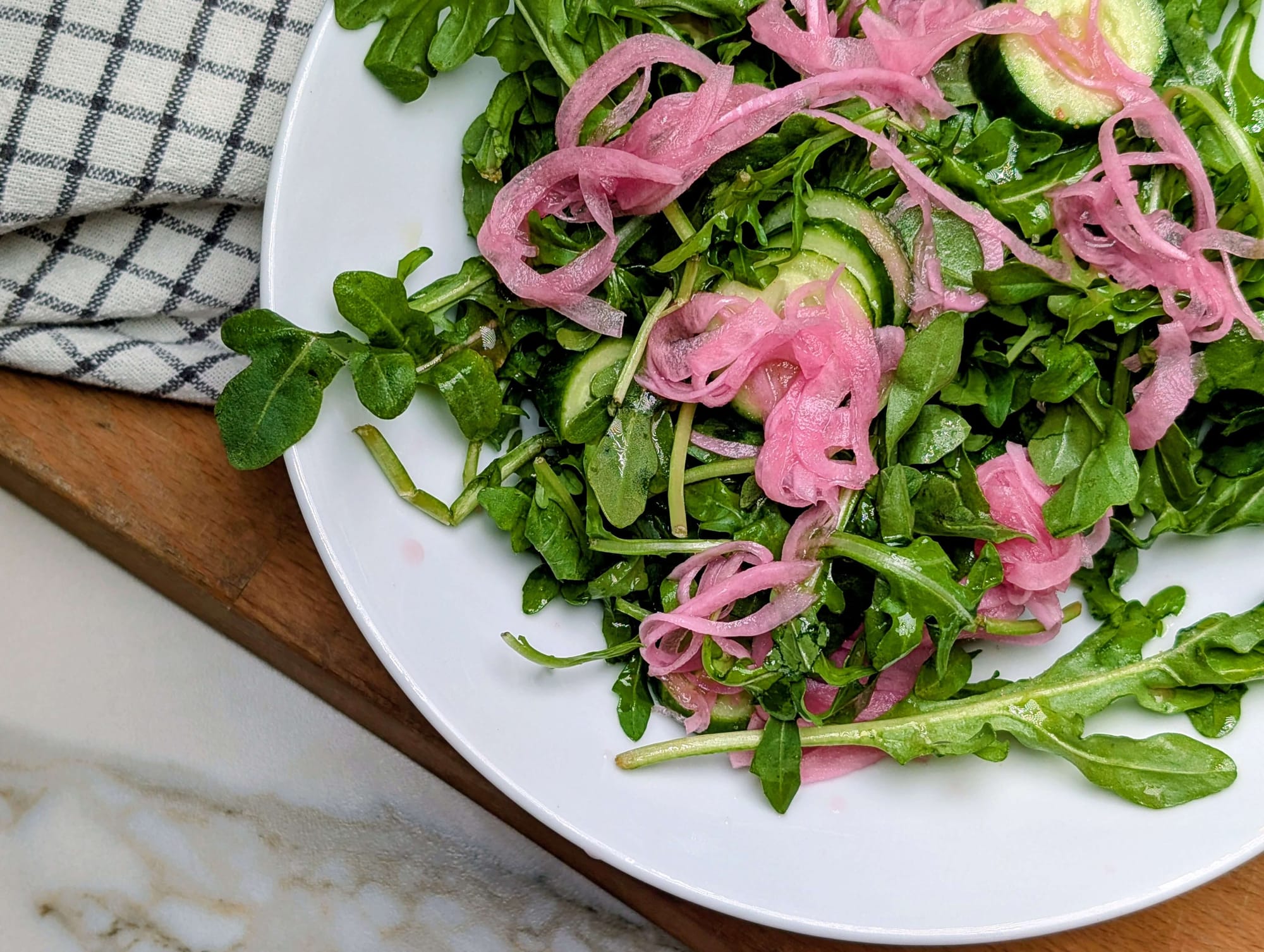
Arugula Summer Salad
Quick and easy and packs a micronutrient punch.
- Arugula
- Pickled Red Onions
- Sliced Cumbers
- Salt
- Balsamic Vinegar
- Olive Oil
- In a bowl as big as the salad you want, place a nice bed of arugula. Top with pickled onions and sliced cucumbers. Sprinkle with salt. Drizzle with olive oil and balsamic vinegar.
Notes:
- I estimate about a cucumber per person. A few healthy handfuls of arugula. Drizzle as much oil and vinegar as you like.
- If your balsamic vinegar doesn't include sugar, you may want to drizzle some honey over your salad. Arugula is quite bitter and peppery.
- You can also substitute pickled onion brine for the balsamic vinegar. Salad dressings are a great way to use the brine up instead of pouring it down the drain when you finish your onions.
- Add cherry tomatoes - high in vitamin c which helps with non heme iron absorption